
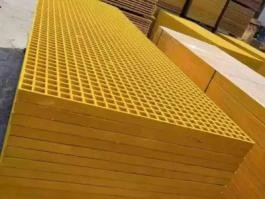
These specifications are based on general industry standards suitable for engineering, procurement, and design references.
This is the most common type of grating, categorized primarily by thickness and mesh size.
| Thickness | Mesh Size (c/c) | Rib Width (Top) | Open Area | Approx. Weight | Typical Applications |
| 25 mm (1") | 38 x 38 mm | 6.5 mm | 69% | 12.5 kg/m² | Pedestrian walkways, light drainage covers |
| 30 mm (1.25") | 38 x 38 mm | 6.5 mm | 69% | 14.6 kg/m² | Light vehicle washing bays, industrial paths |
| 38 mm (1.5") | 38 x 38 mm | 7.0 mm | 69% | 19.5 kg/m² | Standard Industry Size, platforms, heavy loads |
| 50 mm (2") | 50 x 50 mm | 8.0 mm | 78% | 23.5 kg/m² | Heavy-duty loads, large spans, municipal use |
| 25 mm (Mini-Mesh) | 19 x 19 / 38 x 38 | 5.0 mm | 42% | 17.5 kg/m² | ADA compliant, prevents small tools dropping |
Manufacturers produce large full panels which are then cut to size.
| Size (Metric) | Size (Imperial/Approx) | Note |
| 1.22 x 3.66 m | 4 x 12 ft | Global Standard Size |
| 1.00 x 4.04 m | - | Common for specific trench layouts |
| 1.22 x 2.44 m | 4 x 8 ft | Easy to transport |
| 1.52 x 4.00 m | 5 x 13 ft | For wider platforms |
Note: When ordering cut sizes, always account for the saw kerf (cutting loss), usually around 3-5mm per cut.
The price and application environment depend heavily on the resin used.
| Resin Type | Code | Color (Std) | Corrosion Resistance | Flame Spread | Application Environment |
| Orthophthalic | Type O | Green / Grey | Moderate | Class 1 (ASTM E84) | Water/Wastewater, light industrial, municipal |
| Isophthalic | Type I | Yellow / Grey | Excellent | Class 1 (ASTM E84) | Chemical plants, high moisture, acidic areas |
| Vinyl Ester | Type V | Orange / Red | Superior | Class 1 (ASTM E84) | Extreme chemical environments, offshore, harsh acids |
| Surface Type | Description | Function |
| Concave (Meniscus) | Naturally formed curved top | Standard slip resistance, most common |
| Gritted | Quartz sand embedded on top | Maximum slip resistance, best for oily areas |
| Smooth | Ground flat surface | Easy to clean, low slip resistance (decorative) |
| Covered (Solid Top) | FRP plate bonded to grating | Odor control, prevents object fall-through |
Note: Load capacity is determined by the Span (distance between supports). As span increases, capacity decreases.
38mm Grating @ 1000mm Span: Supports approx. 300-400kg concentrated load (suitable for people).
38mm Grating @ 600mm Span: Supports significantly higher loads (suitable for light vehicles).
Fiber Reinforced Plastic (FRP) grating is a composite material made from fiberglass and resin. It is widely used in industrial, commercial, and marine applications due to its superior strength, corrosion resistance, and lightweight properties. Compared to traditional materials like steel and aluminum, FRP grating offers a cost-effective and durable alternative for various structural and flooring applications.
FRP gratings are classified into two main types based on their manufacturing process:
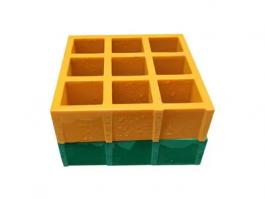
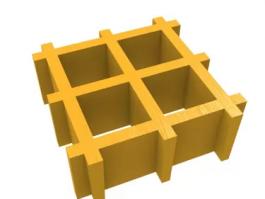
Molded FRP Grating
Manufactured by pouring fiberglass and resin into a mold.
Provides excellent bi-directional strength.
Ideal for applications requiring high corrosion resistance and load-bearing capacity.
Pultruded FRP Grating
Manufactured using a pultrusion process that aligns fiberglass strands in a continuous profile.
Offers superior mechanical strength in one direction.
Suitable for applications requiring higher strength-to-weight ratios.
FRP grating is significantly lighter than steel grating while maintaining high strength and load-bearing capacity. This makes handling and installation easier and reduces transportation costs.
Unlike metal gratings, FRP grating does not rust or corrode when exposed to harsh chemicals, moisture, or extreme environments. This makes it ideal for applications in marine, chemical processing, and wastewater treatment plants.
FRP grating is electrically non-conductive, making it a safe option for electrical and high-voltage environments. Additionally, it can be manufactured with fire-retardant resins to meet fire safety standards.
The surface of FRP grating can be designed with anti-slip coatings or gritted finishes to enhance worker safety, especially in wet or oily conditions.
Compared to traditional materials like steel, FRP grating requires minimal maintenance. It does not need painting, galvanizing, or regular inspections for corrosion.
FRP grating is used in various industries due to its durability and versatility, including:
Industrial Flooring and Walkways – Used in chemical plants, power plants, and food processing facilities.
Offshore and Marine Structures – Ideal for docks, ship decks, and oil rigs due to its corrosion resistance.
Water and Wastewater Treatment Facilities – Used in platforms, drainage covers, and trench grating.
Electrical Substations – Provides a non-conductive flooring solution for high-voltage areas.
Recreational and Commercial Spaces – Applied in pedestrian bridges, parks, and swimming pool decks.
FRP grating is an advanced composite material that offers a combination of strength, durability, and corrosion resistance. Its lightweight nature, safety features, and low maintenance requirements make it a preferred choice over traditional metal gratings. With growing demand for sustainable and cost-effective materials, FRP grating continues to be a vital component in industrial and infrastructure applications.
Contact:
Phone:+8615963283577
E-mail:info@composites-factory.com
Add:China
 Dora
Dora